Deoxyribonucleic acid definition
n., diˈɒksɪraɪboʊnjuːkliːɪk ˈæsɪd
A nucleic acid that generally is double-stranded and helical; a biomolecule containing the genetic information for cell growth, division, and function
Table of Contents
Deoxyribonucleic Acid (DNA) Definition
A nucleic acid refers to any of the group of complex compounds made up of linear chains of monomeric nucleotides. Each nucleotide component, in turn, is made up of phosphate group, sugar, and a nitrogenous base. Nucleic acids are involved in the preservation, replication, and expression of hereditary information. Two major types of nucleic acids are deoxyribonucleic acid (DNA) and ribonucleic acid (RNA).
History and Terminology
Swiss physician and biologist, Friedrich Miescher 1844 –1895, was the first to isolate DNA from the pus of discarded bandages. The then-novel biological molecule was neither a protein, nor a carbohydrate, nor a lipid from the nuclei of white blood cells. He named the compound nuclein from where he was able to isolate it. (Ref. 1) The acidic properties of the compound were discovered by the German chemist, Albrecht Kossel 1853 –1927. He was also known to be the first to identify the nucleobases: adenine, cytosine, guanine, thymine, and uracil. Later, nuclein was replaced with nucleic acid; the term was coined in 1889by the German pathologist, Richard Altmann 1852 –1900. (Ref. 2) The nuclein discovered by Miescher was later particularly identified as DNA. The double-helical model of DNA was attributed to the joined effort of molecular biologists James Watson (American) and Francis Crick (British) in 1953. Their double-helical DNA model was based largely on the information that nucleobases were paired and on the X-ray diffraction image (referred to as Photo 51) by Rosalind Franklin 1920 – 1958 and Raymond Gosling in 1952. Francis Crick was also known for laying out the central dogma of molecular biology. His central dogma depicts the relationship between the nucleic acids DNA and RNA, and proteins. With it, Crick showed how the information would be irreversibly transferred from nucleic acids to proteins. Furthermore, he and his colleagues suggested that the genetic code was read according to codons where each codon consisted of three nucleobases. Indian-American biochemist Har Gobind Khorana 1922 –2011, American biochemist Robert William Holley 1922 –1993, and Jewish American biochemist and geneticist Marshall Warren Nirenberg 1927 –2010 were able to decipher the genetic code and its relevance in protein synthesis. (Ref. 3) In 1944, Oswald Avery, Colin MacLeod, and Maclyn McCarty’s experiment helped set the DNA as the genetic material, which during their time it was largely believed to be protein.
DNA Structure
DNA is a polynucleotide; it is made up of several monomeric units of nucleotides covalently bonded by 3′, 5′ phosphodiester linkages. This means that the 5′-phosphoric group of one nucleotide is esterified with the 3′-hydroxyl of the adjoining nucleotide. Each nucleotide, in turn, consists of phosphate group, a deoxyribose sugar (5-carbon), and a nitrogenous base. The nitrogenous base or nucleobase may be a cytosine (C), guanine (G), adenine (A), or thymine (T). The two strands that make up the DNA form a helical structure. At the core, the nucleobases are complementarily paired. The base-pairing rules are as follows: adenine pairs with thymine whereas cytosine pairs with guanine. The bond that joins the two nucleobases is hydrogen bond. The two strands are antiparallel, which means they run in opposite directions to each other.
DNA molecule has two regions: the coding region and the non-coding region. The non-coding region, as the name implies, is the section of the DNA that does not code for a protein. In a eukaryotic cell, DNA is organized into a chromosome inside the nucleus. The DNA inside the nucleus is compacted by chromatin proteins (e.g. histones). Some of the DNAs are stored in mitochondria (referred to as mitochondrial DNA, mtDNA) and chloroplast (referred to as chloroplast DNA, cpDNA). In a prokaryotic cell, DNAs are found in a special region in the cytoplasm called a nucleoid.

Recommended: DNA Binding Lab Collection. Digital World Biology. https://digitalworldbiology.com/collection/dna-binding-lab. Use this collection of structures to see how molecules interact with DNA.
DNA vs RNA
DNA is a double-stranded nucleic acid containing the genetic information of a living thing. It is essential for the cell growth, division, and function of an organism. RNA is, in general, a single-stranded nucleic acid. Below is a table that summarizes the major differences between DNA and RNA.
| DNA | RNA |
|---|---|
| Structure: DNA is composed of two strands that twist together to form a helix, forming a ladder-like structure. Each strand consists of alternating phosphate (PO4) and pentose sugar (2-deoxyribose), and attached to the sugar is a nitrogenous base, which can be adenine, thymine, guanine, or cytosine. In DNA, adenine pairs with thymine and guanine with cytosine. Not all DNAs are double-stranded. For instance, a group of viruses has a single-stranded DNA genome. | Structure: RNA consists of a long linear chain of nucleotides. Each nucleotide unit is comprised of sugar, a phosphate group, and a nitrogenous base. It differs from DNA in having ribose as its sugar, (deoxyribose in DNA) and the bases are adenine, guanine, cytosine, and uracil. In RNA, adenine pairs with uracil and guanine with cytosine. RNAs are single-stranded except for certain viruses whose genome consists of double-stranded RNA. |
| Location: In eukaryotes, most DNAs are located in the nucleoli and chromosomes in the nucleus. A small fraction of the total DNA is present in mitochondria, chloroplasts, and cytoplasm. In prokaryotes and viruses, DNA is found in the cytoplasm. | Location: In eukaryotes, RNA is found in the nucleus and in the cytoplasm. In prokaryotes and viruses, it is found in the cytoplasm. |
| Function: DNA is a long polymer of nucleotides to code for the sequence of amino acids during protein synthesis. DNA carries the genetic ‘blueprint’ since it contains the instructions or information (called genes) needed to construct cellular components like proteins and RNAs. | Function: In some viruses, RNA is the genetic material. For most organisms, RNAs are involved in: protein synthesis (e.g. mRNA, tRNA, rRNA, etc.), post-transcriptional modification, or DNA replication (e.g. snRNA, snoRNA, etc.), and gene regulation (e.g. miRNA, siRNA, tasiRNA, etc.). |
Prokaryotic DNA vs Eukaryotic DNAOne of the possible explanations why DNA has thymine instead of uracil is associated with the conversion of cytosine into uracil by spontaneous deamination. Cytosine can turn into uracil when it loses its amine group. This deamination of cytosine is a common occurrence. Nevertheless, the error is corrected through inherent DNA repair systems. If not repaired though, it could lead to point mutation. If uracil is present in the DNA, the repair systems may not be able to distinguish the original uracil from the cytosine-turned-uracil and therefore may fail to discern which uracil to correct. The presence of a methyl group in thymine (which is absent in uracil) helps avert this from happening, thereby, preserving the integrity and stability of the genetic code.
| Prokaryotic DNA | Eukaryotic (nuclear) DNA |
|---|---|
| Structure: Often circular and naked, meaning it is not bound with proteins. Compact genomes, with little repetitive DNA but without introns | Structure: Bound with proteins (e.g. histones) and therefore forms chromatin. Genomes with many non-coding and repetitive DNA sequences (including introns) |
| Location: Found in the cytoplasmic region called the nucleoid | Location: Located inside the nucleus |
| Plasmid: With extra-chromosomal plasmids | Plasmid: No plasmids |
Nuclear DNA vs. Extranuclear DNA
DNA outside the nucleus is referred to as extranuclear DNA. Examples of extranuclear DNAs are mitochondrial DNA (mtDNA) and chloroplast DNA (cpDNA). The presence of nucleic acids in these organelles enables them to become semi-autonomous, self-reproducing organelles. These organelles have their own genetic system that enables DNA replication and protein synthesis although certain proteins for replication and protein synthesis are still encoded by the nuclear DNA. Apart from replication and protein synthesis, mtDNA and cpDNA code for proteins crucial to their functions. For instance, genes in the mitochondrial genome encode proteins in the electron transport chain. Genes in the chloroplast genome encode for proteins used in photosynthesis. Contrary to the nuclear DNA, both cpDNA and mtDNA occur in multiple copies since there are several chloroplasts and mitochondria while there is usually just one nucleus inside a cell. A cell would, therefore, contain several copies of mtDNA and cpDNA, often in thousands. Nuclear DNAs are compacted into chromatin structures through histones whereas mtDNA and cpDNA are not. Many scientists believe that mtDNA and cpDNA are genetic material that came from ancient endosymbionts. Endosymbiotic theory suggests that mitochondria and chloroplasts came about as a result of the early endosymbiosis between prokaryotic endosymbionts and eukaryotic host cells. The basis is the genetic material contained in these organelles that resemble prokaryotic DNAs, i.e. being circular and lacking in histones.
The extranuclear DNA apparently does not follow the Mendelian pattern of inheritance. mtDNA and cpDNA are considered as maternally-inherited. In humans, mtDNA is used in forensics and genealogy to trace the ancestral female line of an individual. This is based on the notion that at fertilization the head of the sperm cell fuses with the egg cell so that their nuclear DNA could form a union. As for the mtDNA, the only source would be the ovum since the sperm’s mitochondrial genome would end up disintegrating together with its flagellum and other cytoplasmic structures during fertilization.
Common Biological Reactions
DNA replication
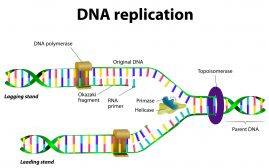
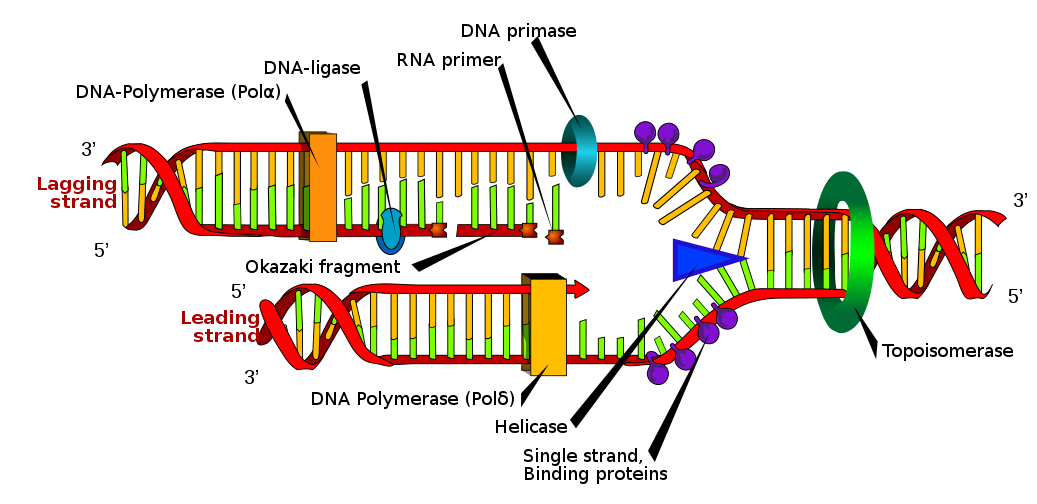
DNA replication is a process where the original (parent) strands of DNA in the double helix are separated and copied to produce a new (daughter) DNA molecule. This process is said to be semi-conservative. That is because the new DNA molecule will consist of one of the parent strands (thereby, “conserved”). In essence, each of the parent strands of the DNA molecule will be replicated by base pairing. The purine nucleobase (i.e. adenine and guanine) is going to be paired with the pyrimidine nucleobase (i.e. cytosine and thymine). In particular, the adenine will pair with thymine while guanine with cytosine. DNA replication is necessary for cell division. In the early stages of mitosis (prophase) and meiosis (prophase I), DNA is replicated. In mitosis, the process will culminate in the production of two cells containing identical copies of DNA. DNA replication can also be carried out artificially through a laboratory technique called polymerase chain reaction. It can amplify the target DNA fragment from the genome.
Transcription (for translation)
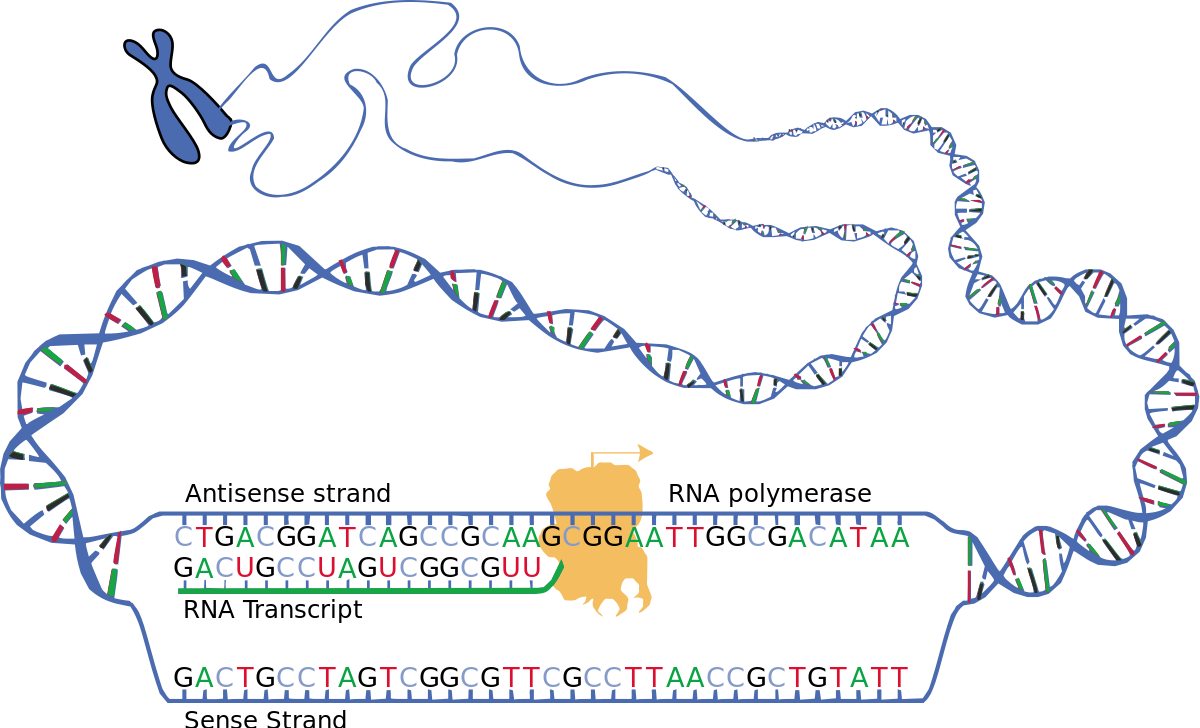
DNA carries the genetic information that codes for a particular protein. Thus, during protein translation, the genetic code for a protein is first copied into the RNA (specifically, mRNA). This process of creating a copy of DNA into mRNA through the help of the enzyme RNA polymerase is called transcription. Although RNA polymerase traverses the DNA template strand from 3′ → 5′, the coding (non-template) strand is usually used as the reference point. Hence, the process proceeds in the 5′ → 3′ direction, like in DNA replication. However, unlike DNA replication, transcription does not need a primer to start and it uses base pairing to create an RNA copy containing uracil instead of thymine.
In prokaryotes, transcription occurs in the cytoplasm whereas in eukaryotes it takes place primarily in the nucleus before the mRNA is transported into the cytoplasm for translation or for protein synthesis.
Degradation
The degradation of nucleic acids like DNA yields purines, pyrimidines, phosphoric acid, and a pentose, either D-ribose or D-deoxyribose.
DNA repair mechanisms
Certain mutations or errors occurring in the DNA are repaired by two major mechanisms: (1) the direct reversal of the chemical process that caused the damage and (2) the replacement of damaged nitrogenous bases. In direct reversal DNA repair mechanism, a template is not required and the change is superseded as the original nucleotide is restored. In DNA repair by excision, a template is required. Repair is carried out by excising and replacing the damaged DNA with new nucleotides. The excision repair is of three forms: (1) base-excision repair (where a single nucleotide change is recognized and subsequently excised by glycosylases), (2) nucleotide excision repair (where multiple base changes are recognized and then cleaved by endonucleases), and (3) mismatch repair (when mismatched bases are later recognized and eventually corrected by excising the error). (Ref. 4)
Read: Recombination DNA repair mechanisms
Biological Importance
DNA contains the genetic information of many organisms. This biomolecule is regarded as the most crucial biomolecule for its involvement in all cellular functions and heredity. DNA mutation is a vital source of variability among species. Although not all mutations could lead to significant changes in the expression of the genetic code, some of these mutations could lead to the improvement of a species, enabling an organism to acquire novel characteristics that could help it adapt better or survive in its environment. However, there are also certain mutations in the genetic code that are pathological, meaning they could lead to impaired protein function and eventuate to metabolic disorders and physical deformities. Many of such disorders are due to a supposedly functional protein that apparently became insufficiently produced or has become dysfunctional due to a mutation in the gene(s) coding for it.
DNA that comprises the genome of an organism could be passed on to the succeeding generations, either in part (via sexual reproduction) or as a whole (as in the case of parthenogenesis, cloning, or other asexual modes of reproduction). Thus, apart from inheriting beneficial features, the offspring might also inherit certain disorders and diseases from their parents.
Recommended: Bio-ITEST Genetic Research. Digital World Biology. https://digitalworldbiology.com/bio-itest-genetic-research. (A series of nine lessons plus an optional wet lab)
Read:
- DNA Structure & DNA Replication – Biology Online Tutorial
- Gene – Definition and Examples
- What is The Genetic code
- RNA (ribonucleic acid)
- Nucleic acid – Definition, Types, and Functions
- What is a Nucleotide?
References:
- “nucleic acid”. (2014). Retrieved from https://www.nature.com/scitable/definition/nucleic-acid-274-Link
- Gribbin, J. (2002). The Scientists: A History of Science Told Through the Lives of Its Greatest Inventors. New York: Random House. p. 546. ISBN 0812967887.
- The Nobel Prize in Physiology or Medicine 1968. (2019). Retrieved from https://www.nobelprize.org/prizes/medicine/1968/summary/
- Gonzaga, M. V. (2018, July 22). How cell fixes DNA damage – Biology Blog & Dictionary Online. (2018, July 22). Retrieved from https://www.biologyonline.com/cell-fixes-dna-damage/

© Biology Online. Content provided and moderated by Biology Online Editors