Cytoplasm
n., plural: cytoplasms
[ˈsaɪtəʊˌplæzəm]
Definition: the contents of a cell surrounded by a cell membrane but not including the nucleus if present
Table of Contents
Cytoplasm Definition
The cell is known as the building block of all life. Blocks are made up of numerous particles and components before it becomes a full block. Just like a block, the cell of a living organism is made up of many components as well. Cytology, the study of cells tells us that inside a cell, there could essentially be nuclei, other organelles, and the cytoplasm. What is cytoplasm? How would one define cytoplasm?
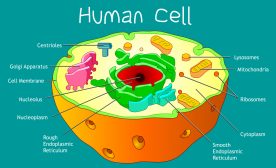
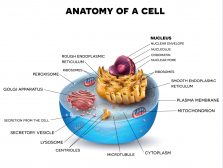
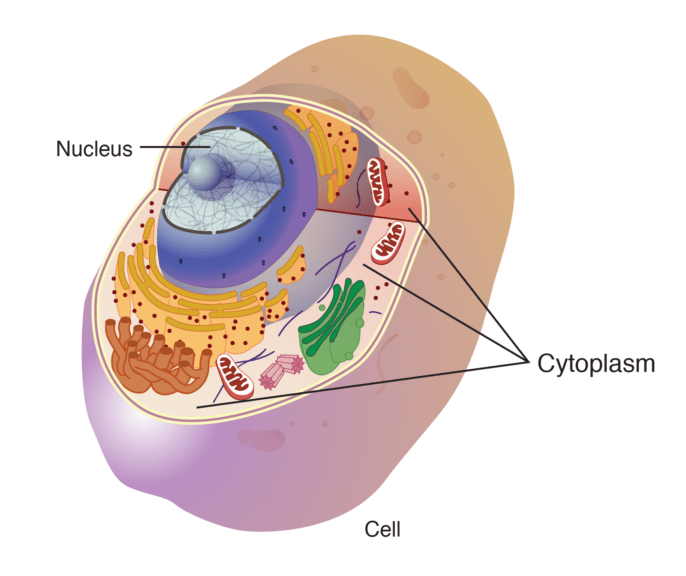
In biology, the cytoplasm is a rich, semifluid material present in cells of organisms that are closed off by the cell membrane. It contains various cytoplasmic components, such as the cytosol, cytoplasmic structures, mitochondria, and other organelles. In some references, the nucleus, which is a prominent organelle suspended in the cellular fluid, is considered part of the cytoplasm. And so in this case, it would therefore be the largest organelle in the cytoplasm. However, this point of view takes the cytoplasm as a synonym for protoplasm. The protoplasm is the fluid living content of the cell that is basically made up of the cytoplasm and the nucleoplasm. The cytoplasm, in turn, is the protoplasmic contents between the cell membrane and the nuclear envelope. Thus, a stricter definition of cytoplasm is one that excludes the nucleus. The cytoplasm is defined as the cellular component inside the cell between the cell membrane and the nuclear envelope of the nucleus. (Goodman et al., 2007) Considering this definition, where can we, therefore, find the cytoplasm? Where is it located? The cytoplasm is found within the cell. In a eukaryotic cell — such as an animal cell and a plant cell, the cytoplasm is between the cell membrane and the nuclear envelope. As for a prokaryotic cell — such as a bacterial cell — lacking a well-defined nucleus, the cytoplasm is simply everything there is inside the cell, surrounded by a cell membrane. Figure 1 below shows a diagram of the cell with the cytoplasm annotated.
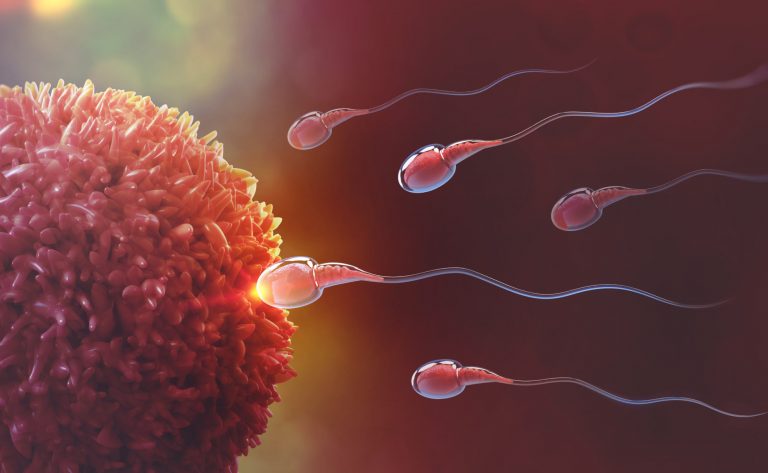
Do all cells have cytoplasm? All cells have cytoplasm. However, the size of the cytoplasm may vary from one cell to another. A fully-differentiated sperm cell, for instance, would lose much of its cytoplasmic organelles. Its head at maturity has very little cytoplasm and with extremely compact nucleus for a more streamlined structure for motility. In contrast, the ovum is a large cell because of the large cytoplasm it has. It is in fact, considered the largest cell of the human body, being about 10,000 times larger than a sperm cell. The reason the ovum is big is to contain sufficient nutrients that would support life should it get fertilized and give rise to a zygote.
The cytoplasm is the rich, viscous fluid present in the cells of organisms that are closed off by the cell membrane. It is made up of the cytosol, intracellular structures, mitochondria, and other organelles. While cytoplasm may be used as a synonym for protoplasm, there is a subtle difference. The protoplasm is the living content of the cell made up of the cytoplasm and the nucleoplasm (the fluid inside the nucleus). The cytoplasm, in turn, excludes the nucleoplasm and, therefore, it is that protoplasmic content between the cell membrane and the nuclear envelope. Etymology: from Greek “kyto”-, “kýtos”, meaning “container”, “receptacle”, “body” and Greek “plásma”. Related forms: cytoplasmic (adjective). See: cell. Compare: cytosol, protoplasm
What does the cytoplasm do? The main purpose of cytoplasm is to be the suspension medium of the cell. The cytoplasm in animal cells keeps the organelles of the cells secure and assists with the mobility of the cell. Cytoplasm functions in a plant cell are almost identical to that of the animal cell. The cytoplasm in the plant cell aids with the suspension of organelles, support of cell internal structure as well as helps the plant cell maintain its shape. Cytoplasms, particularly the cell cytoplasm are made of various segments.
What is the cytoplasm made of? The watery component of the cytoplasm is called cytosol. The cytosol is made up of mostly water with a few other dissolved salts and ions. Note that cytosol is not the same as the cytoplasm as we compare cytosol vs. cytoplasm. The difference between cytosol and cytoplasm is that the cytosol is a component of cytoplasm. The cytosol is known as the fluid segment of the cytoplasm. The other parts of the cytoplasm consist of organelles and inclusions.
Physical Nature
The cytoplasm is somewhat of a mystery as it serves both the purpose of mobility and structure for the cell. It allows organelles to move throughout the cell while ensuring that the cell itself has a solid structure. Flow in and out of the cell, known as cytoplasmic flow plays a crucial part in numerous cellular functions. However, this flow is dependent on the type of cell and the permeability it allows within its cytoplasm. For instance, many cellular processes and functions involve the diffusion of cell components across the cell membrane. Cell signaling is one of those processes. Larger structures and molecules often need help when moving throughout the cytoplasm whereas the smaller ones such as calcium ions have no issues diffusing in and out of the cell cytoplasm.
As a sol-gel
Sometimes, the cytoplasm is known to behave similarly to that of a sol-gel. A sol-gel is a mixture of molecules that sometimes act like a collusion solution or a liquid (sol) and other times acts like a solid (gel) integrated network.
As a glass
It has also been observed that cytoplasms sometimes have glass-like behavior as well. This is when the cytoplasm acts as though it is approaching the glass transition as a glass-forming liquid. This comes off the theory that sometimes that cytoplasm may contain many solid components and hence the cytosol needs to act as glass and hold the solid components together so that they do not move excessively. This behavior still allows however for the movement of organelles and other inclusions across the cytoplasm and membrane if needed. This ability of the cytoplasm to somewhat “freeze” everything in place actually becomes very handy as a self-defense mechanism. This frozen stature would prevent harmful physical effects to the cell while still allowing cellular activities to take place whenever the goes back to a more fluid state.
Other perspectives
Some other research has questioned whether the constituents of the cytoplasm move separately from the cytoplasmic entity itself. These are theorized to be channeled by motor proteins which assist with this non-Brownian motion within the cells versus actually having random forces causing the movements.
Cytoplasm Structure
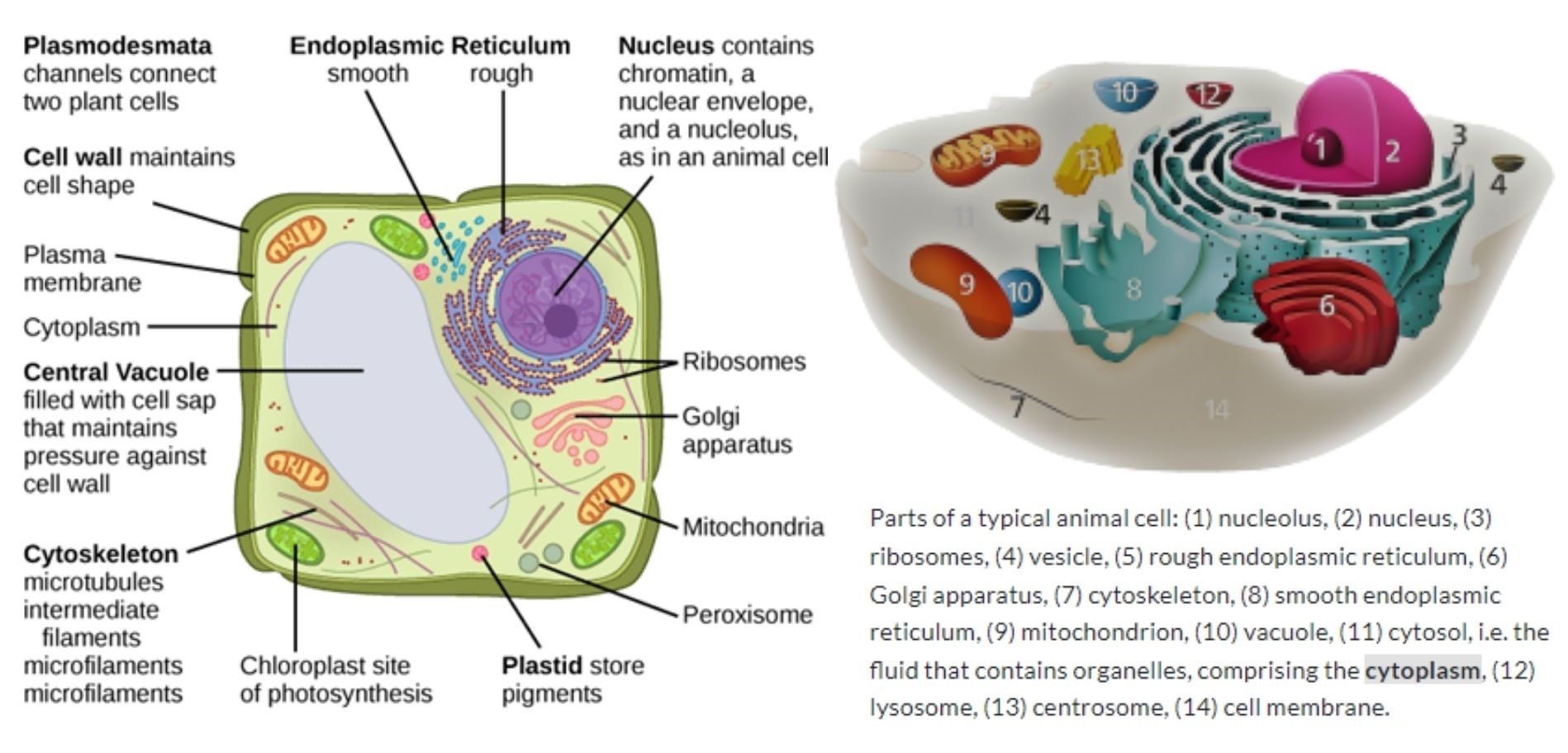
As previously mentioned, the cytoplasm is the partially liquid, gel-like substance within the cell that holds the nucleus and other cytoplasmic organelles and is enclosed by the cell membrane. The cytoplasm can be easily observed by staining the cell and examining it under a microscope. The main components of the cytoplasm are cytosol, organelles, and cytoplasmic inclusions. Below in Figure 3 is a well-labeled diagram of the cytoplasm structure.
Cytosol
The cytosol is the part of the cytoplasm that is the liquid-like portion. It is mostly made up of water, dissolved minerals, and cytoskeleton filaments. It, however, does not contain any organelles but holds them within the cell as part of the entire cytoplasm. It consists of water, organic molecules, and dissolved ions. The highest percentage of cytosol component is water, i.e. about 70%. The typical ions in the mammalian cytosol are potassium, sodium, chloride, bicarbonate, amino acids in proteins, magnesium, and calcium. The cytosol serves as the site where many chemical reactions take place. In prokaryotes, it is where most metabolic reactions take place (others occur in the cell membrane). In eukaryotes, it is where the organelles and other cytoplasmic structures are suspended. Since the cytosol contains dissolved ions, it plays a role in osmoregulation and cell signaling. It is also involved in generating action potentials in cells, such as endocrine, nerve, and muscle cells.
Organelles
Organelles are the membrane-bond, specialized structures within cells that carry out specific tasks for the cell. The term “organelles” is based on the organs, as the organs in animals and humans work similarly in carrying out a specific task for the body. See Figure 3 for the various organelles found in a plant cell and an animal cell. In eukaryotic cells, the nucleus, for instance, is the organelle that contains the genetic material, and therefore it controls cellular activities such as metabolism, growth, and reproduction by regulating gene expression. Chloroplasts are plastids containing green pigments essential for photosynthesis. Mitochondria are the organelles that synthesize energy for multifarious metabolic processes. The endoplasmic reticulum occurs as an interconnected network of flattened sacs or tubules involved in lipid synthesis, carbohydrate metabolism, drug detoxification, and attachment of receptors on cell membrane proteins. It is also involved in intracellular transport, such as the transport of the products (of the rough endoplasmic reticulum) to other cell parts like the Golgi apparatus. Golgi apparatus is made up of membrane-bound stacks. It is involved in glycosylation, packaging of molecules for secretion, transporting of lipids within the cell, and giving rise to lysosomes. Other cytoplasmic structures found in the cytoplasm are vacuoles and ribosomes. Ribosomes, the site of protein synthesis, are comprised of protein and RNA. Some ribosomes are unbound whereas the others are attached to the endoplasmic reticulum.
Cytoplasmic Inclusions
Cytoplasmic inclusions are part of the cytosol but are not membrane-bound so they are not considered organelles. Instead, they are suspended in the cytosol as small, insoluble particles. Cytoplasmic inclusions depend on the type of cell they are in. For instance, an animal cell would neither have nor need starch, the glycogen of Polyhydroxybutyrate (PHB), because these are energy storage units that are needed by plant cells after they photosynthesize. On the other hand, there are cytoplasmic inclusions called lipid droplets. These are used by both plant and animals cells to store lipids like fatty acids. Lipid droplets are made of both lipids and proteins so that they don’t dissolve into the cytosol.
Cytoplasm Function
The cytoplasm (of both eukaryotes and prokaryotes) is where the functions for cell expansion, growth, and metabolism are carried out. Numerous chemical reactions including cellular metabolism take part in the cytoplasm as it acts as a bridge between the cell membrane and most organelles. The cytoplasm also has many other functions including:
- Support and Structure
- To aid with cell structure and turbidity. It helps the cells maintain their shape which is important for the arrangement of cells.
- To keep organelles in place. As mentioned previously, the cytoplasm keeps the membrane-bound organelles in place within the cell and prevents them from making unnecessary movements.
- The cytosol – part of the cytoplasm – fills up the empty spaces in the cell that are not covered by the organelles (also part of the cytoplasm).
- Protection
- To protect the cell and its components from damage. The cytoplasm in helping keep cell shape but also being able to keep organelles in place places a major part in the cell’s defense strategies.
- Often the cytoplasm acts as a shock-absorber when the cell is attacked and cushions that blow to the cell.
- Storage
- It contains materials such as storage units and enzymes that are essential for many metabolic activities.
- In plant cells, they include important storage units that are used to store excess glucose made during photosynthesis.
- Transport
- Through the process of cytoplasmic streaming, the cytoplasm assists with the transport of organelles and cytoplasmic inclusions all over the cell.
- The cytoplasm also transports waste material out of the cell.
If there was no cytoplasm in the cell, the cell would not be able to function. It would be flat and have no shape. In addition, the organelles would not be able to be suspended in the cell either.
Cytokinesis
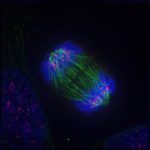
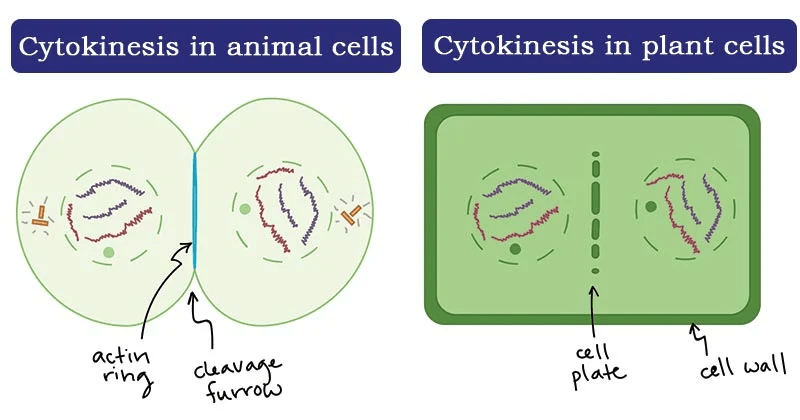
When cell multiplication and division occur, the cytoplasm will split as well to become part of the new cells. The division of the cytoplasm is called cytokinesis. This occurs during meiosis or mitosis of the cell. The ending result is usually two (2) new daughter cells (mitosis) or four (4) new gametes or sex cells (meiosis). The figure below shows cytokinesis occurring in both an animal and a plant cell.
Cytoplasmic Streaming
Also known as protoplasmic streaming, cytoplasmic streaming occurs when the cytoplasm itself moves within the cell membrane in a plant or animal cell. The movement is made mainly as a transportation system in the cell to get the necessary components to the places they need to be. For instance, to move organelles around for metabolic activities or to get proteins and nutrients to the nucleus and other organelles. Cytoplasmic streaming is not completely understood in the way it works. However, it is believed that with a mixture of motor proteins and adenosine triphosphate (ATP) the process occurs and is able to transport molecules all over the cell. In the video below, cytoplasmic streaming can be viewed in an Eldodea cell.
Try to answer the quiz below to check what you have learned so far about cytoplasm.

References
- Cowan, A. E., Moraru, I. I., Schaff, J. C., Slepchenko, B. M., & Loew, L. M. (2012). Spatial modeling of cell signaling networks. Methods in Cell Biology, 110, 195–221. https://doi.org/10.1016/B978-0-12-388403-9.00008-4
- Cytoplasm. (n.d.-a). Genome.Gov. Retrieved November 23, 2021, from https://www.genome.gov/genetics-glossary/Cytoplasm
- Cytoplasm | Definition & Function | Britannica. (n.d.). Retrieved November 23, 2021, from https://www.britannica.com/science/cytoplasm
- Cytoplasm | Learn Science at Scitable. (n.d.). Retrieved November 23, 2021, from https://www.nature.com/scitable/definition/cytoplasm-280/
- Cytoplasm: Function and Facts. (n.d.-b). Sciencing. Retrieved November 23, 2021, from https://sciencing.com/cytoplasm-function-and-facts-13714432.html
- Cytoplasm—An Overview of its Structure And Functions. (n.d.). BYJUS. Retrieved November 23, 2021, from https://byjus.com/biology/cytoplasm-structure-function/
- Cytoplasm—Definition, Function, Structure and Location. (n.d.). Retrieved November 23, 2021, from https://www.microscopemaster.com/cytoplasm.html
- Cytoplasmic streaming | Definition & Facts | Britannica. (n.d.). Retrieved November 24, 2021, from https://www.britannica.com/science/cytoplasmic-streaming
- Goodman, S.R. et al. (2007). Medical Cell Biology, Third Edition. Elsevier B.V. https://www.sciencedirect.com/science/article/pii/B9780123704580500062
- Parry, B. R., Surovtsev, I. V., Cabeen, M. T., O’Hern, C. S., Dufresne, E. R., & Jacobs-Wagner, C. (2014). The bacterial cytoplasm has glass-like properties and is fluidized by metabolic activity. Cell, 156(1–2), 183–194. https://doi.org/10.1016/j.cell.2013.11.028
- Sol-Gel—An overview | ScienceDirect Topics. (n.d.). Retrieved November 23, 2021, from https://www.sciencedirect.com/topics/materials-science/sol-gel
- Taylor, C. V. (1923). The contractile vacuole in Euplotes: An example of the sol-gel reversibility of cytoplasm. Journal of Experimental Zoology, 37(3), 259–289. https://doi.org/10.1002/jez.1400370302
- The contractile vacuole in Euplotes: An example of the sol‐gel reversibility of cytoplasm—Taylor—1923—Journal of Experimental Zoology—Wiley Online Library. (n.d.). Retrieved November 23, 2021, from
https://onlinelibrary.wiley.com/doi/10.1002/jez.1400370302
©BiologyOnline.com. Content provided and moderated by Biology Online Editors.